
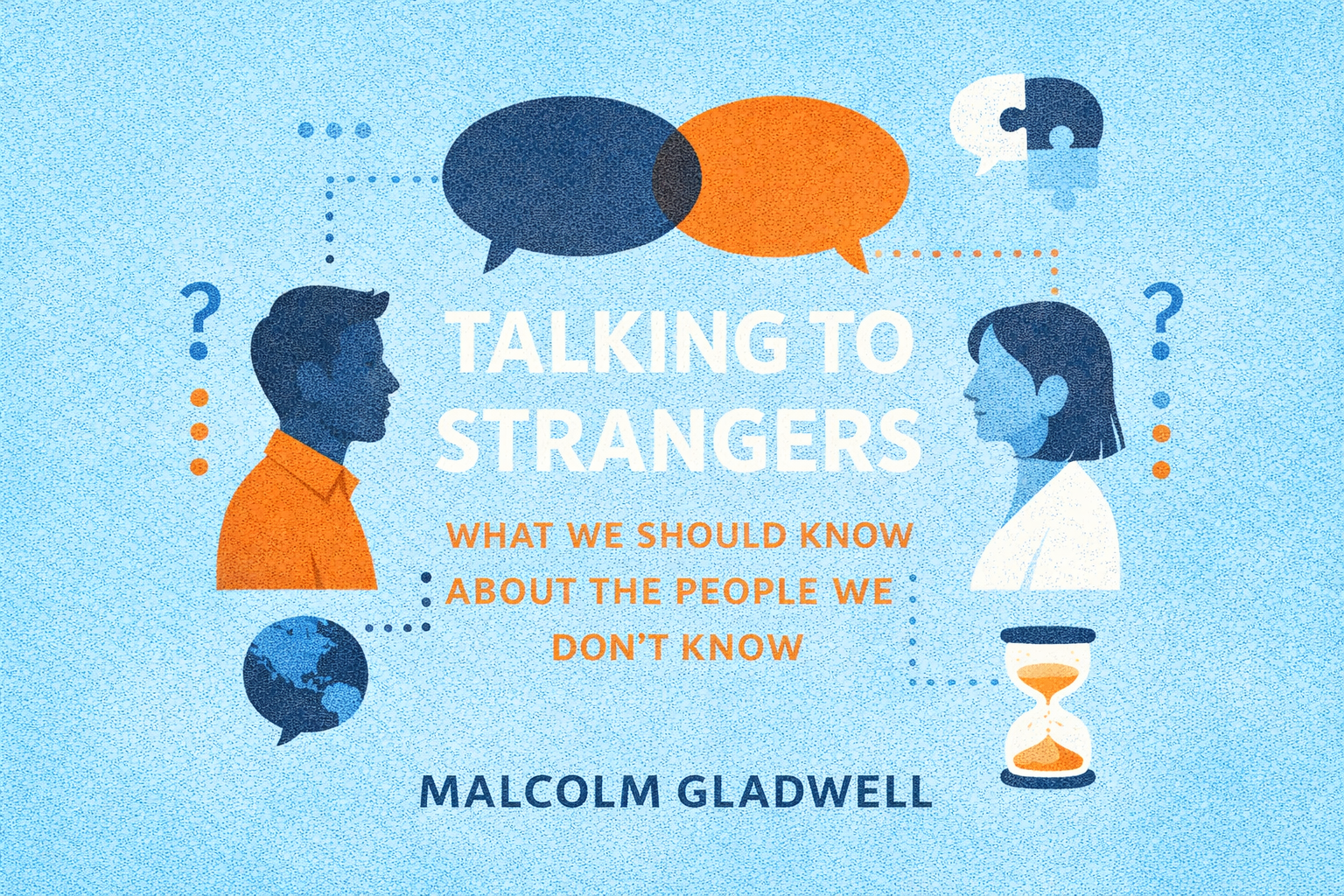
Malcom Gladwell – Talking to Strangers: What We Should Know about the People We Don’t Know
Summary: Malcolm Gladwell examines why our interactions with strangers so often go catastrophically wrong, exploring high-profile cases from Bernie Madoff’s deception to the tragic death of Sandra Bland. Through a blend of history, psychology and real-world scandals, Gladwell identifies fundamental flaws in the tools and strategies we use to understand people we don’t know — including our bias toward believing others are telling the truth (the „truth-default theory“), our mistaken belief that people’s behavior transparently reveals their inner thoughts and our failure to recognize how context shapes behavior. The book challenges our assumptions about transparency, honesty and human nature, arguing that these misunderstandings don’t just lead to awkward encounters but invite serious conflict and misunderstanding that profoundly affect our lives and society. Gladwell weaves together diverse examples — from Neville Chamberlain’s misreading of Hitler to the Jerry Sandusky scandal — to demonstrate how our flawed approach to strangers creates a pattern of preventable tragedies.
Why we like it: This book is essential reading because it fundamentally challenges how we interpret human behavior in an increasingly interconnected world where we constantly encounter strangers. Gladwell’s insight that we should approach strangers with „caution and humility“ rather than confident judgment offers a crucial corrective to our overconfident assumptions — potentially preventing misunderstandings that range from personal conflicts to systemic injustices, making it vital reading for anyone navigating our complex, diverse society.