
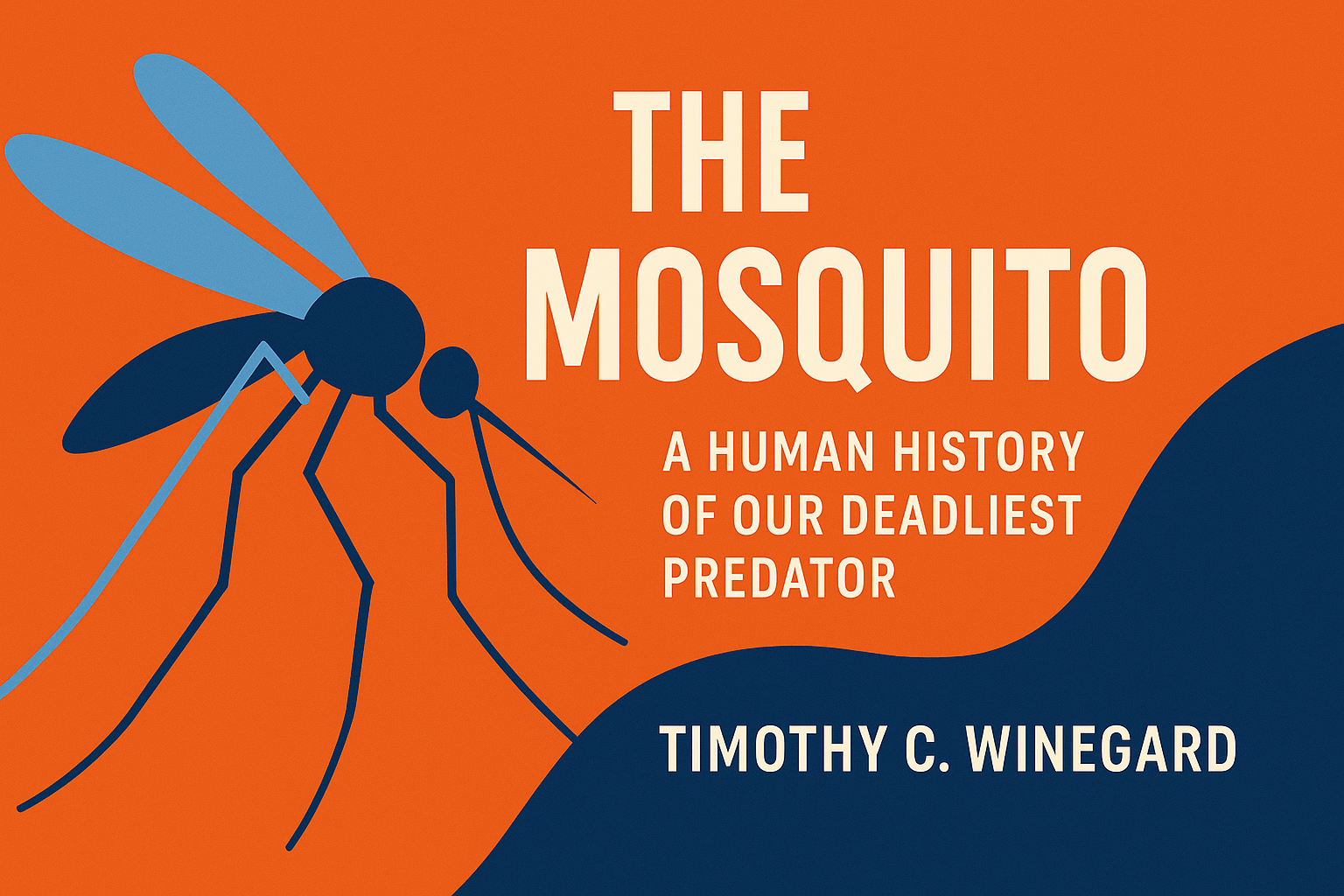
Timothy C. Winegard – The Mosquito: A Human History of Our Deadliest Predator
Summary: In „The Mosquito,“ historian Timothy C. Winegard presents a groundbreaking thesis that mosquitoes have been the single deadliest force in human history, responsible for killing nearly half of all humans who have ever lived — an estimated 52 billion people — through the diseases they transmit, particularly malaria, yellow fever, dengue, and encephalitis. Winegard meticulously demonstrates how mosquitoes have shaped the course of human civilization, determining the outcomes of wars (from Alexander the Great’s campaigns to World War II), influencing the rise and fall of empires, enabling European colonization of the Americas through disease that decimated indigenous populations and even affecting the economic viability of slavery and the geography of human settlement. The book weaves together military history, epidemiology, economics and ecology to show how this tiny insect has been a more decisive force in human affairs than any general, politician or revolutionary, acting as both killer and kingmaker throughout history. Winegard also explores contemporary challenges, including climate change expanding mosquito habitats, evolving drug resistance and the ongoing battle to control mosquito-borne diseases that still kill hundreds of thousands annually.
Why we like it: This book is particularly valuable because it radically reframes our understanding of history by placing an overlooked biological factor — the mosquito — at the center of human events, revealing how natural forces have shaped political, military and social outcomes in ways traditional history often ignores. Winegard’s interdisciplinary approach and compelling narrative make complex scientific and historical connections accessible while delivering a sobering reminder that in our relationship with nature, we are not always the dominant species — making it essential reading for anyone interested in the hidden forces that have truly shaped human civilization.